The Beauty of Shadows: Why Great Lighting Design Is Also About Darkness
The architecture of absence
In architectural lighting, we often measure success by what we illuminate. We discuss brightness, uniformity, color temperature, and the ability to reveal materials and architectural details. Yet some of the most powerful spatial experiences are created not by the presence of light, but by its deliberate absence.
Shadow is not a failure of lighting design. It is an essential part of its vocabulary.
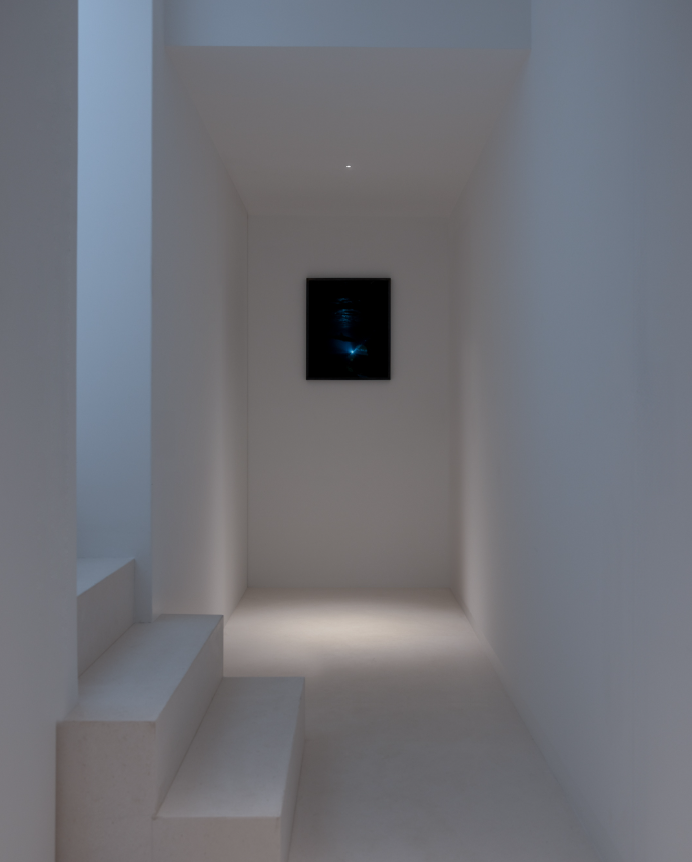
Without shadow, architecture loses depth. Materials become flattened, forms lose their definition, and spaces can become visually monotonous. It is the relationship between light and darkness that allows us to perceive texture, proportion, rhythm, and atmosphere.
More importantly, shadow creates opportunities for something that is increasingly rare in our built environments: stillness.
When every surface is illuminated, every object competes for our attention. There is little hierarchy and fewer opportunities for the eye to rest. By contrast, a carefully restrained lighting composition can guide our attention toward what matters while allowing everything else to recede.
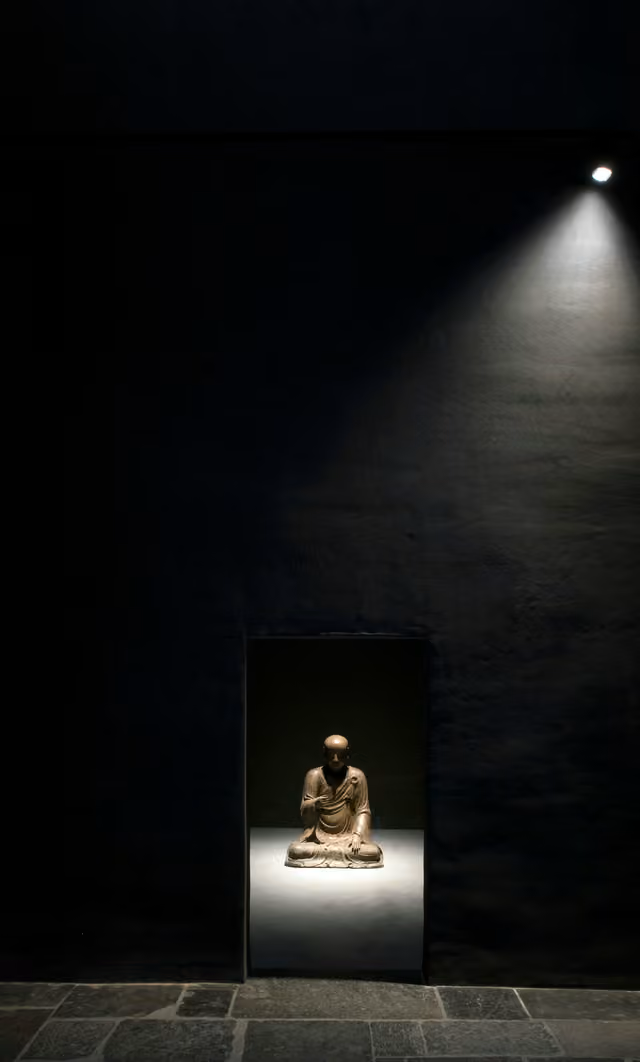
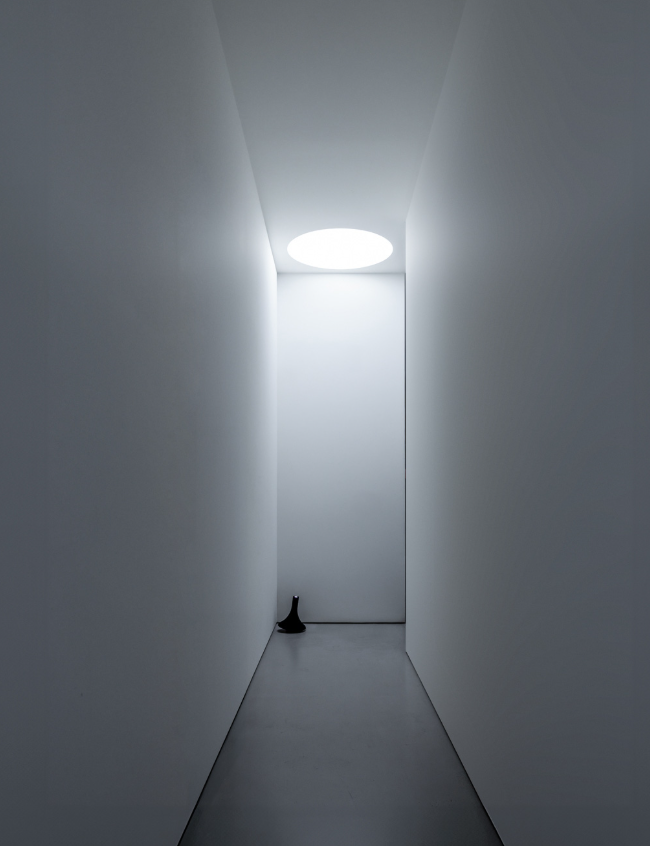
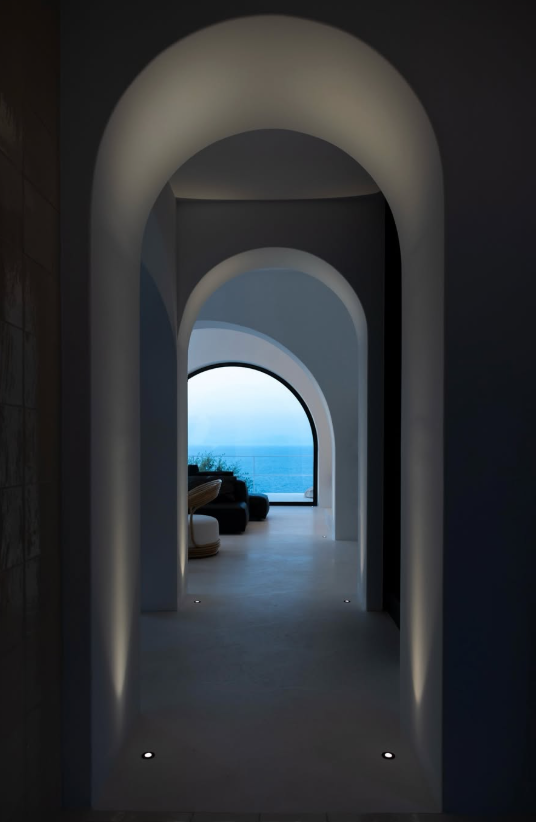
This restraint can create moments of reverence and introspection. A softly illuminated wall at the end of a dark corridor, a shaft of daylight falling across a stone floor, or a single pool of warm light surrounding a chair can transform an ordinary architectural moment into an experience that feels intimate and contemplative.
The question is no longer simply how much light a space needs, but what deserves to be illuminated, and what should remain in shadow?
A Lessons from Nordic design
Nordic architecture offers a compelling perspective on this relationship.
In countries such as Finland, Sweden, Norway, and Denmark, the dramatic seasonal variation in daylight has shaped how people experience and design their environments. Long winter nights and low-angle sunlight encourage a heightened awareness of light as a precious and changing resource.
Rather than treating darkness as something that must always be eliminated, many Nordic interiors embrace the contrast between illuminated and unilluminated surfaces.
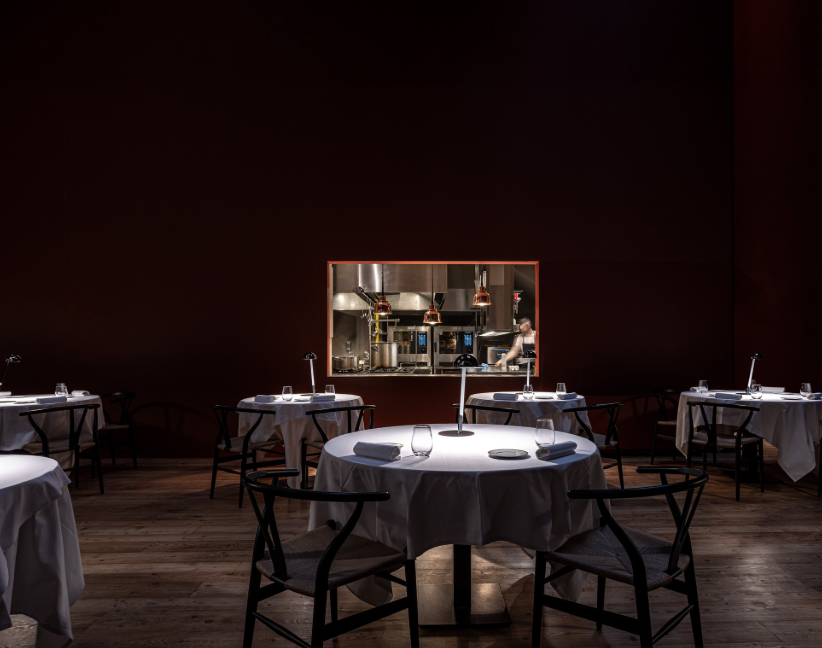
A pendant suspended low over a dining table creates a warm center of activity while the surrounding room remains subdued. A window carefully positioned to capture the low winter sun introduces a fleeting moment of brightness. A restrained wall light reveals the grain of timber without flooding the entire room.
These gestures create a sense of intimacy, warmth, and human scale.
Architects such as Alvar Aalto understood that light must be considered alongside materials, human experience, and the character of a space. In his work, daylight and electric lighting were not merely functional requirements, but integral components of architectural expression.
This philosophy invites us to reconsider a common assumption in contemporary design: that brighter and more uniformly illuminated spaces are inherently better.
In reality, visual comfort is not synonymous with maximum brightness. Sometimes, it is achieved through thoughtful contrast, controlled luminance, and the freedom to experience darker surroundings.
From atmosphere to attention: the science of focused light
The value of selective illumination extends beyond aesthetics.
Our visual system is constantly processing information from the environment. Bright surfaces, reflections, movement, and high-contrast objects can all compete for attention.
Lighting design can influence this visual landscape by establishing a hierarchy between the task and its surroundings.
Consider a workspace with uniformly bright overhead lighting. The desk, surrounding walls, shelves, circulation areas, and background objects may all receive similar levels of illumination.
Now imagine the same space with a carefully positioned task light illuminating the work surface, softer ambient lighting supporting visual comfort, and reduced emphasis on peripheral elements.
The second environment establishes a clearer visual focal point. The work surface becomes prominent, while less relevant visual information recedes.
This does not mean darker rooms automatically improve concentration. The relationship between lighting and cognitive performance is more complex, involving illuminance, glare, color characteristics, time of day, task type, and individual sensitivity.
However, research into lighting and human performance suggests that appropriately designed illumination can affect alertness, visual comfort, and certain aspects of cognitive functioning.
For designers, this creates an opportunity to think beyond general illumination and consider how light might support specific behaviors.
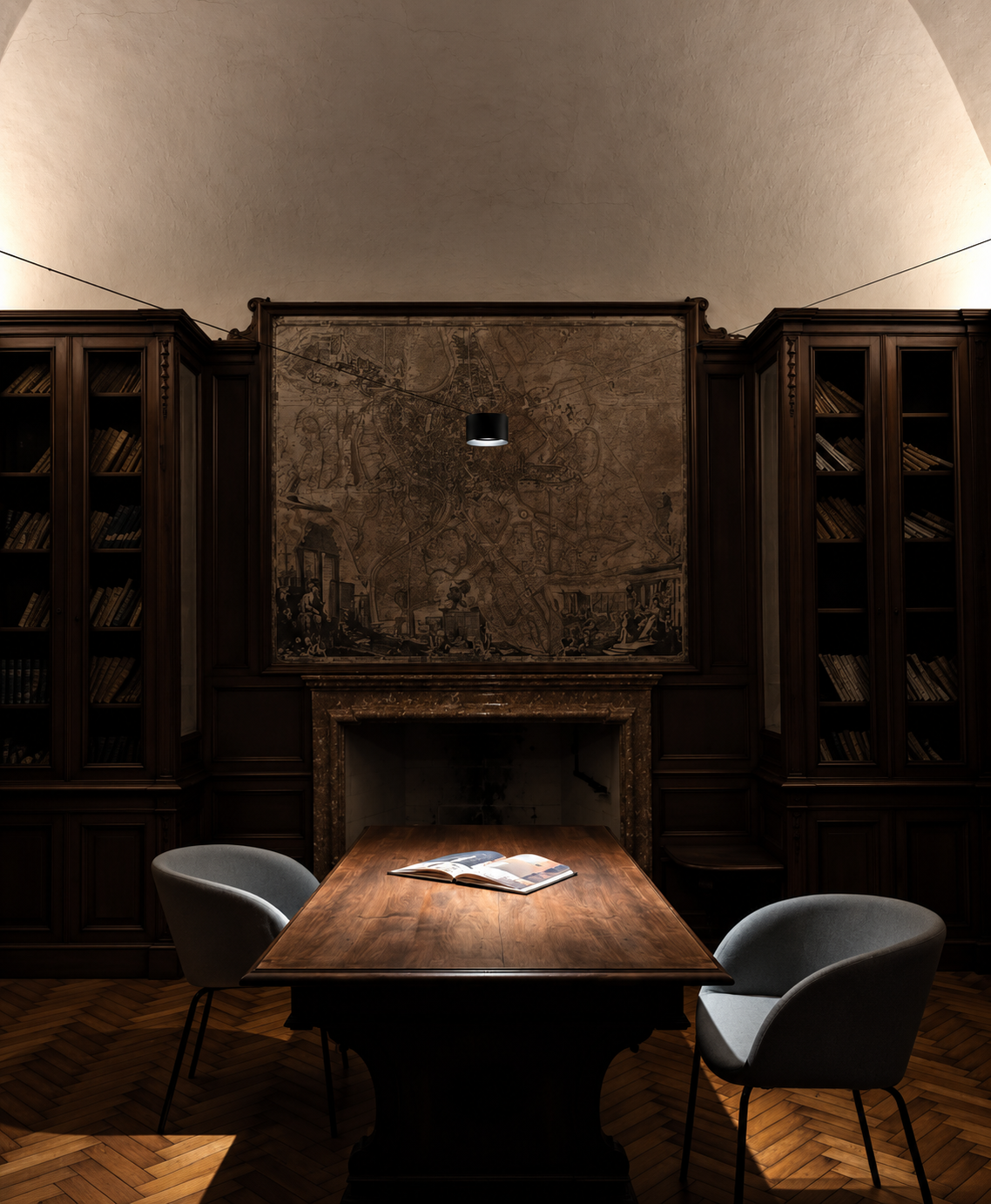
Lighting, attention, and ADHD
This conversation becomes particularly interesting when considering attention-deficit/hyperactivity disorder (ADHD).
People with ADHD can experience difficulties regulating attention and filtering competing stimuli. Although these challenges differ significantly from person to person, the design of the surrounding environment may influence how manageable a task feels.
A visually busy environment, with multiple bright sources, distracting reflections, or poorly controlled glare, may create unnecessary sensory demands.
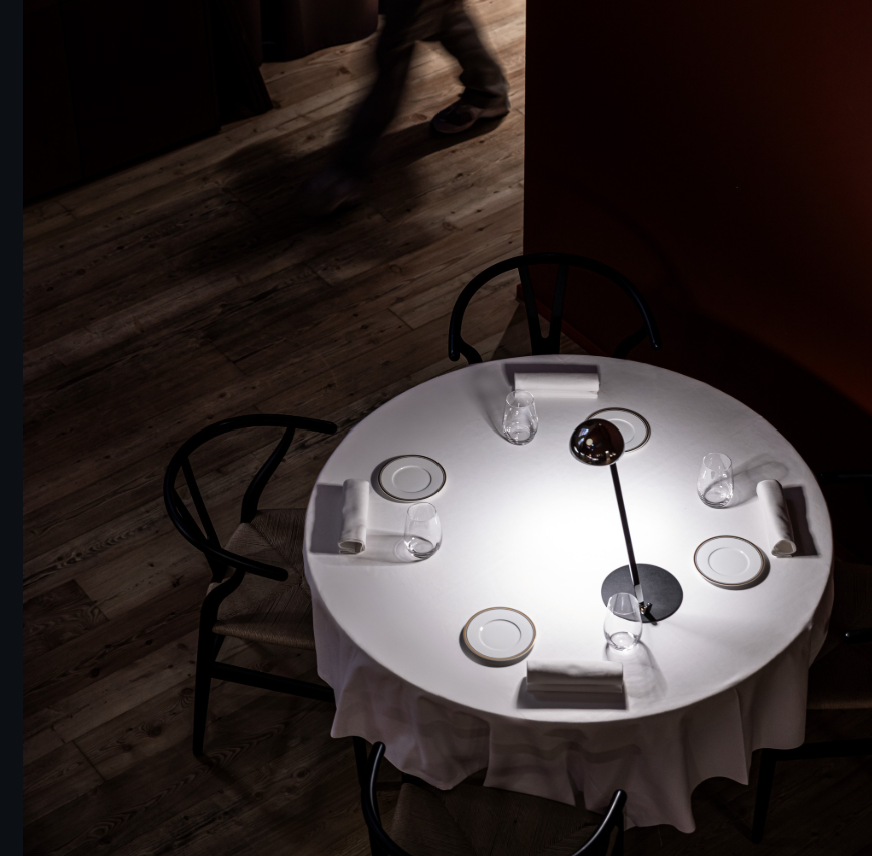
Focused task lighting offers a potential design strategy: illuminate the activity clearly while reducing unnecessary visual competition.
For example, an adjustable desk lamp can provide appropriate illumination for reading or writing without requiring the entire room to be brightly illuminated. Indirect ambient lighting can maintain comfortable visibility in the surrounding space, while dimming controls allow the user to adjust conditions according to personal preference.
Importantly, there is not yet strong evidence that spotlighting a task or keeping the surrounding room darker directly improves ADHD symptoms or executive functioning. Research supports thoughtful lighting for visual comfort and performance more broadly, but ADHD-specific benefits should be framed as a design hypothesis rather than an established treatment.
The architectural opportunity is to create environments that offer flexibility, control, and fewer unwanted distractions.
Rather than designing one lighting condition for everyone, we can create spaces that adapt to the individual.
What the research tells us
Several studies provide a useful scientific foundation for this approach, while also revealing important limitations.
1. Lighting conditions and task performance
A 2020 review published in Energy and Buildings examined how illuminance, contrast, and color temperature influence visual and cognitive performance. The authors found that lighting conditions can affect performance, although the results varied across tasks and studies.
2. Focused task illumination versus overall room brightness
A 2020 study by de Vries and colleagues examined desk illuminance ranging from 150 to 1,500 lux while maintaining consistent wall brightness. Higher task illuminance improved visual acuity, but produced only minor changes in cognitive performance and alertness.
This distinction is important: illuminating a task more effectively does not necessarily mean that a person will concentrate better.
3. Light exposure, attention, and reaction time
A systematic review published in 2021 found that brighter, shorter-wavelength light exposure was often associated with greater alertness and faster reaction times. These findings suggest that light can influence cognitive processes through mechanisms extending beyond visibility alone.
Taken together, these findings support a more nuanced design philosophy: lighting should respond to the activity, the time of day, and the individual rather than relying on a single uniform solution.
Designing for both contemplation and performance
At first glance, a contemplative space and a productive workspace may seem to require fundamentally different lighting approaches.
One encourages stillness. The other supports activity.
Yet both can benefit from the same underlying principle: intentional visual hierarchy.
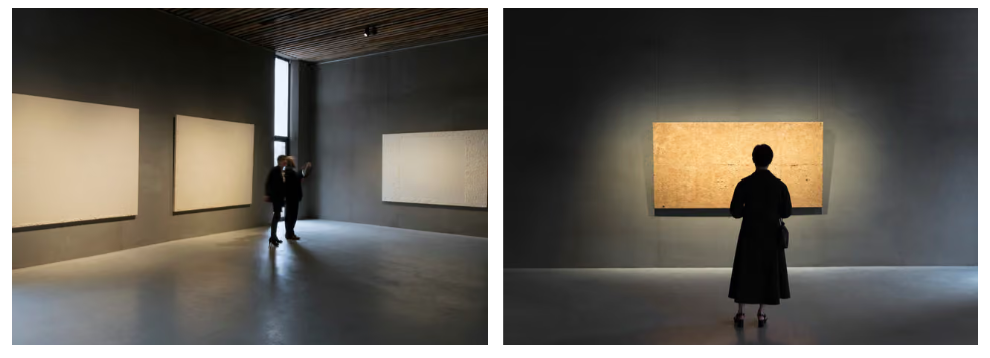
In a contemplative space, we may use light sparingly to draw attention toward an architectural element, an artwork, or a moment of quiet.
In a workspace, we may concentrate illumination on the task while maintaining comfortable ambient light and minimizing glare.
The desired outcomes differ, but the design philosophy remains consistent.
We are not simply providing light. We are shaping where attention goes.
For us at Agapeh Lighting, this is where architectural lighting becomes especially meaningful. It moves beyond the technical exercise of illuminating surfaces and begins to engage with human perception, behavior, and emotional experience.
A successful lighting design does not demand attention from every corner of a room. It allows architecture to breathe. It creates moments of emphasis and moments of rest.
It recognizes that darkness is not an absence to be corrected, but a quality to be considered.
Perhaps the greatest sophistication in lighting design lies not in how much we illuminate, but in knowing when to stop.
Research and architectural references
Konstantzos et al. (2020) - The Effect of Lighting Environment on Task Performance in Buildings: A Review.
de Vries et al. (2020) - Teasing Apart Office Illumination: Isolating the Effects of Task Illuminance on Office Workers.
Effects of Light on Attention and Reaction Time - Systematic review.
Architecture and Design Museum, Helsinki - Aalto's architectural approach to light and wellbeing.
Danish Architecture Center - Light in Architecture: How Light Shapes Space, Atmosphere, and Experience.